

What is BoP at Le Mans 24hr


BoP is a key element of Hypercar and LMGT3 regulations. It is a series of technical adjustments, primarily affecting weight and power, that are designed to create a level playing field among cars of different design and architecture. Here's a comprehensive explainer of the process as we are only a week away from this year's 24 Hours of Le Mans.
BoP therefore maintains a similar level of performance between all cars, which reduces development costs significantly. All the manufacturers present on the grid accepted the underlying principles before entering the FIA World Endurance Championship (WEC) and the 24 Hours of Le Mans. BoP has therefore played an active part in producing grids of unprecedented strength and depth, with 14 manufacturers represented in 2024.

The purpose of BoP is to balance the cars’ performance potential. In other words, it assumes that each car is exploited to the hilt. It is not designed to erase performance deltas between two cars built by the same manufacturer or to help an abnormally slow competitor make up the entire gap on their rivals. Nor does it replace operational performance – whether that be tyre management, driver ability, pit time or racing performance – which are all decisive factors and the major component of overall performance.
How does Balance of Performance work?
BoP is established jointly by the FIA and the ACO, who work closely with the various manufacturers. It draws on the data measured during the cars’ homologation process and, as far as the FIA WEC is concerned, on each manufacturer's individual performance recorded on the racetrack by means of various sensors and indicators.

For Hypercar, it is defined in three successive steps. Firstly, the FIA and the ACO balance the “homologation parameters” – the technical characteristics observed during homologation when the cars are inspected, measured and examined in a wind tunnel. It should be remembered that the aerodynamic performance window applying to Hypercar homologation is very narrow, so there is very little difference between the cars before reaching this first step.
The second step is “platform equivalence”. Two different technical rulebooks govern the Hypercar class: Le Mans Daytona h (LMDh) regulations based on the use of common parts, and Le Mans Hypercar (LMH) regulations which offer manufacturers greater freedom. The two sets of regulations are very similar, but their different conception may call for performance adjustments. To achieve this, “platform equivalence” is applied across all cars of the same type, taking on board the performance levels of the best LMDh-type car and the best LMH-type car.
The second step is “platform equivalence”. Two different technical rulebooks govern the Hypercar class: Le Mans Daytona h (LMDh) regulations based on the use of common parts, and Le Mans Hypercar (LMH) regulations which offer manufacturers greater freedom. The two sets of regulations are very similar, but their different conception may call for performance adjustments. To achieve this, “platform equivalence” is applied across all cars of the same type, taking on board the performance levels of the best LMDh-type car and the best LMH-type car.

The final step – “manufacturer compensation” – considers the individual performance of each manufacturer based on the in-race data collected. We must emphasise that “manufacturer compensations” – whatever their nature – are used sparingly and only where the data is deemed to be sufficiently robust, which takes several races.
An identical process is used for LMGT3, except that there is no “platform equivalence” as all the cars are built to the same technical regulations. A weight handicap, based on the championship standings, is added at each race except for the 24 Hours of Le Mans.
How does the process apply to the 24 Hours of Le Mans? How does BoP differ specifically for this race?
The 24 Hours of Le Mans Hypercar BoP differs in that it takes account of data from the previous year’s race, so there is not necessarily a direct link with the BoP published for the 6 Hours of Spa-Francorchamps, for instance.

For 2024, the analyses conducted by the FIA and the ACO and the restrictive nature of the applicable technical regulations have meant that BoP has been kept to a minimum. Only “homologation parameters” have been corrected based on measured data. Weight and power adjustments have been adapted on this basis to the Le Mans circuit, but no platform equivalence or manufacturer compensation have been applied. The merits of each constructor will therefore be appreciated at their just value.
We have also introduced a measure of a purely technical nature: power differentiation at low and high speed. This does not alter the actual BoP, but it does modulate the power delivered above 250 kph to balance peak speeds without the need for excessive adjustments to weight or power.
Source material - ACO
Photo credits - D Gibson/N Dungeon
Saturday, June 08, 2024 |
Read more...
Time passsing galleries - Part 11 AMR dominate ACO rules racing

2016 became something of a new dawn for Aston Martin Racing with a change in ACO/FIA technical regulation allowing for their venerable normally aspirated V8 Vantage GTE to be given a new lease of life against some much newer machinery as well as changes in technical partners and driver strategies.
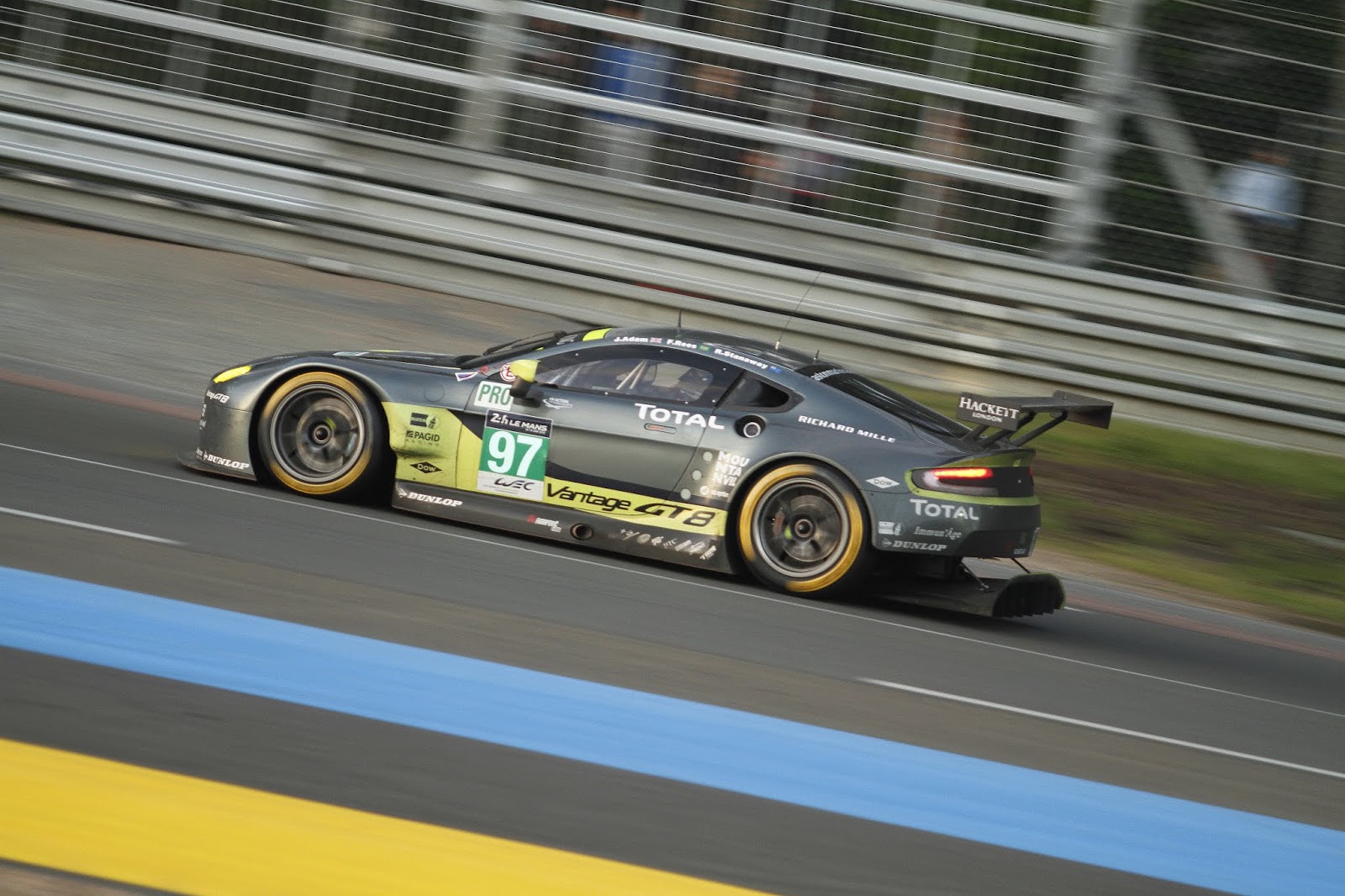
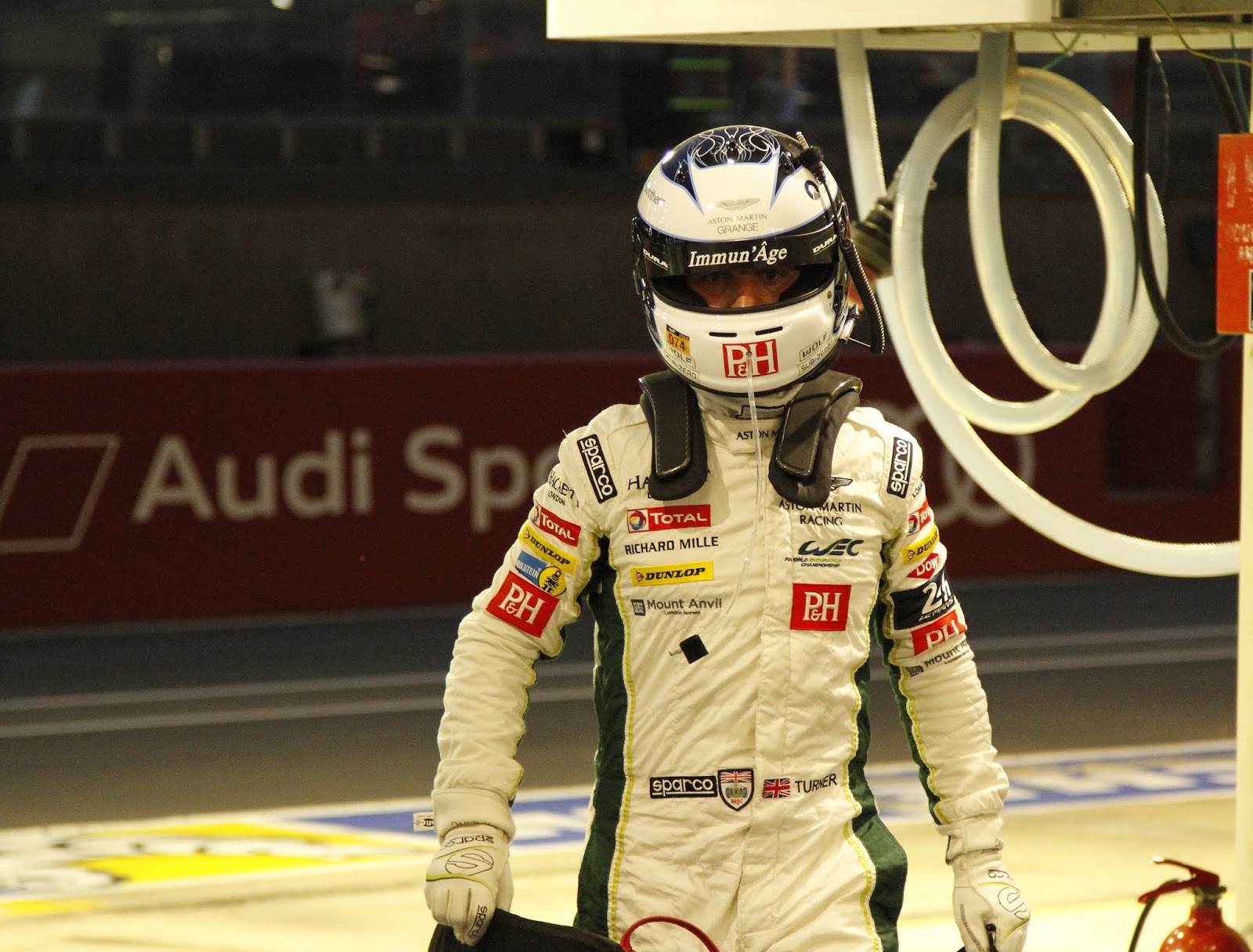
Apart from the colours of Valero coming back for the opening round of the 2016 World Endurance Championship, the three other factory supported cars would run in the teams new darker Sterling Green and lime colour scheme. The #97 Valero car would again run with just two drivers Richie Stanaway and Fernando Rees whilst Jonny Adam would at least join them again for just Le Mans. With Stefan Mucke now with the Ford GT programme, that left Darren Turner to make up the trio of drivers with Marco Sorensen and Nicki Thiim aboard the #95 Dane Train whilst Paul Dalla Lana, Mathias Lauda and Pedro Lamy would all come to together again aboard the #98 GTE Am entry.
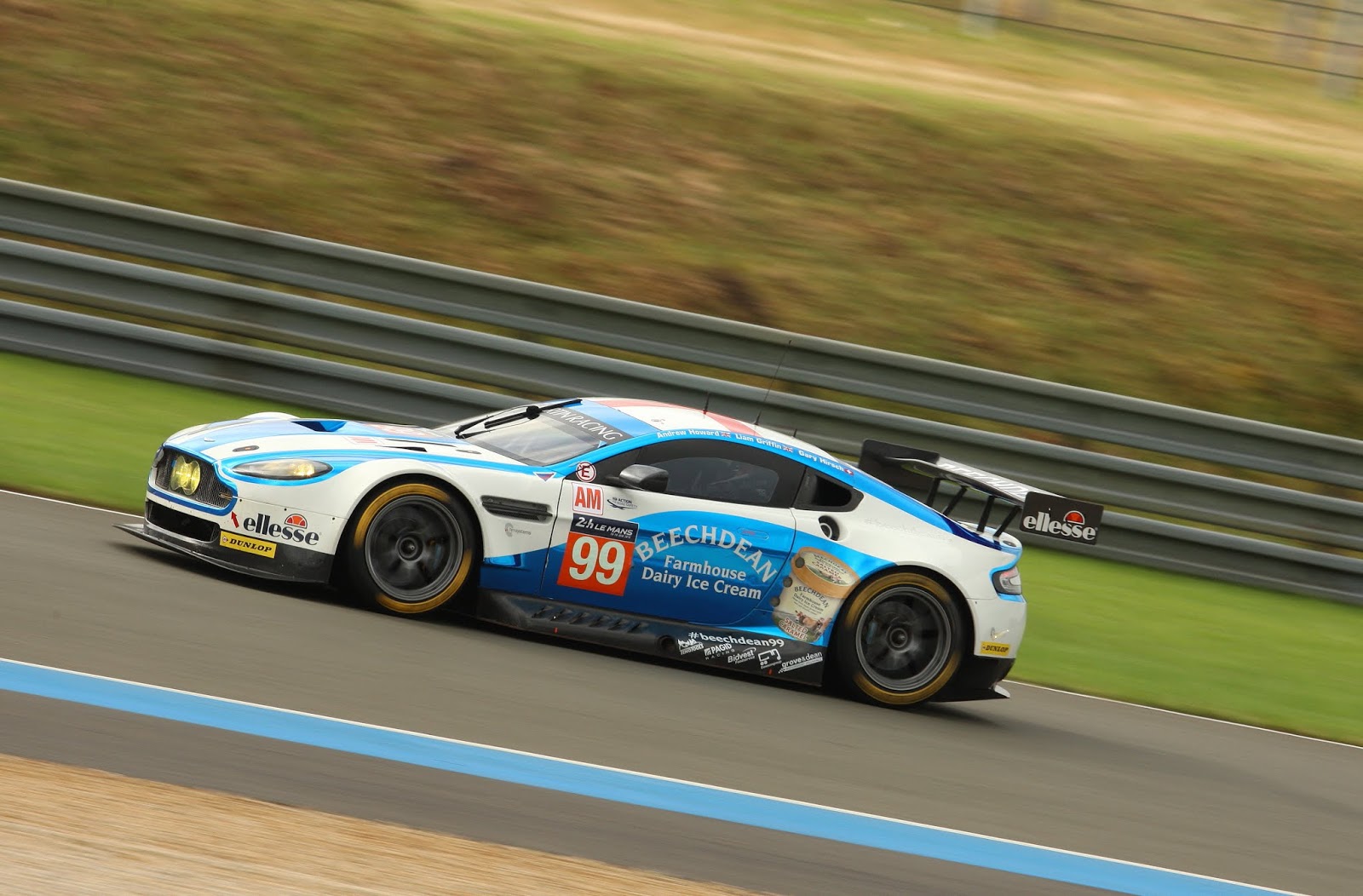
Meanwhile, Andrew Howard's Beechdean Motorsport team would sign up for a full season of the European Le Mans Series with his older iteration of the normally aspirated V8 Vantage GTE with co-drivers Alex MacDowall and Darren Turner. For their season opener at Silverstone, they would be joined by the RoFGo Vantage GTE of Roald Goethe, Stuart Hall and Richie Stanaway.
Indeed, it was that race that produced the most race and post race excitement as originally both AMR's finished P2 and P3 respectively - both behind the JMW Ferrari before post race penalties took effect and the #99 Beechdean car was elevated for a race win whilst the #96 RoFGo car retained their third place despite receiving a time penalty themselves.
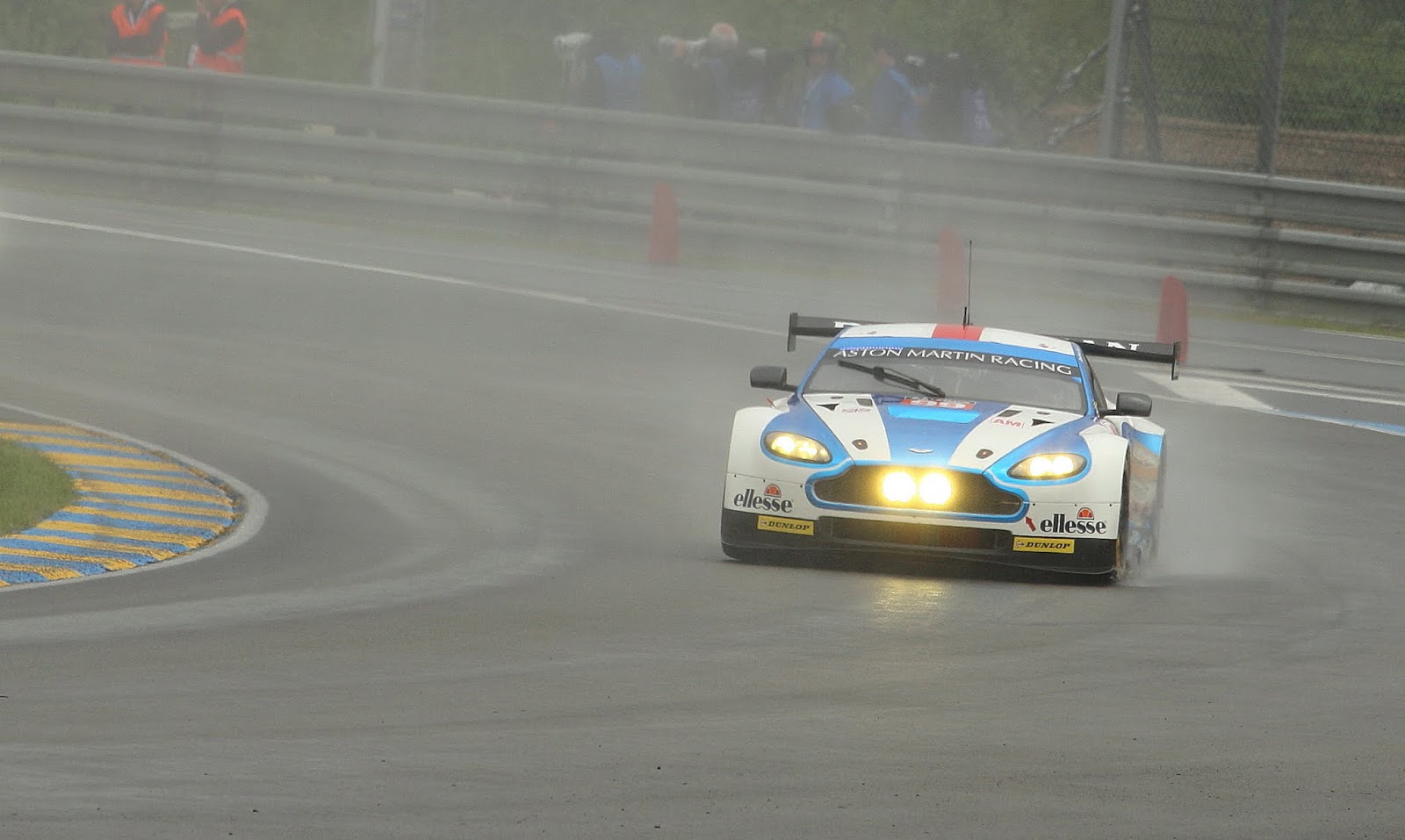
Using that momentum, the #99 crew then went on to secure the overall ELMS GTE crown at the first time of asking after also winning the final round of the season at Estoril. They would also enter their Vantage GTE at this years Le Mans 24Hour with new drivers Gary Hirsch and Liam Griffin driving alongside team boss Howard.
2016 became a year when the term 'balance of performance' really took a meaning in ACO GTE rules racing as the brand new Ford GT and the new Ferrari 488 became dominant forces from the word go, despite that the #95 still managed to finish on the podium at Silverstone and it would be the 'yo-yo' effect of these Bop changes that would became pivotable later in the season.
After the shenanigans at Le Mans with multiple pre-event and post Qualifying adjustments in BoP, together with the unsurprising GTE win for the new Ford GT in their anniversary year, AMR went away looking for rewards in the longer game in both classes that resulted in the #95 car of Nicki Thiim and Marco Sorensen rightfully claiming the GTE Pro Drivers Championship after their win in Bahrain at the end of the season.
The same may have true in GTE Am for the #98 but despite five class wins and a P2, their technical DNF at Le Mans was again sadly enough for that trio to lose out on that overall crown again.
The last few days have seen more positive news coming through of national Governments and race series alike in regards to the relaxing of control measures imposed as a result of the Corona-virus pandemic. In some parts of Europe race testing has just begun again so (very much with fingers crossed) that relaxation of these measures will become more widespread around the world - all soon enough to allow some sort of race season to be had in what is left of 2020.
In the meantime, keep safe - be sensible and hygienic and just maybe that point in time will come soon enough. As with all of these gallery posts, we dedicate them to the hard work of not just the health services around the world but also the efforts of the other 'key workers' in keeping everything ticking over ready for the rest of us to pick up and push on with.










'Twas a good year!!
Keep safe
Saturday, May 16, 2020 |
Read more...


